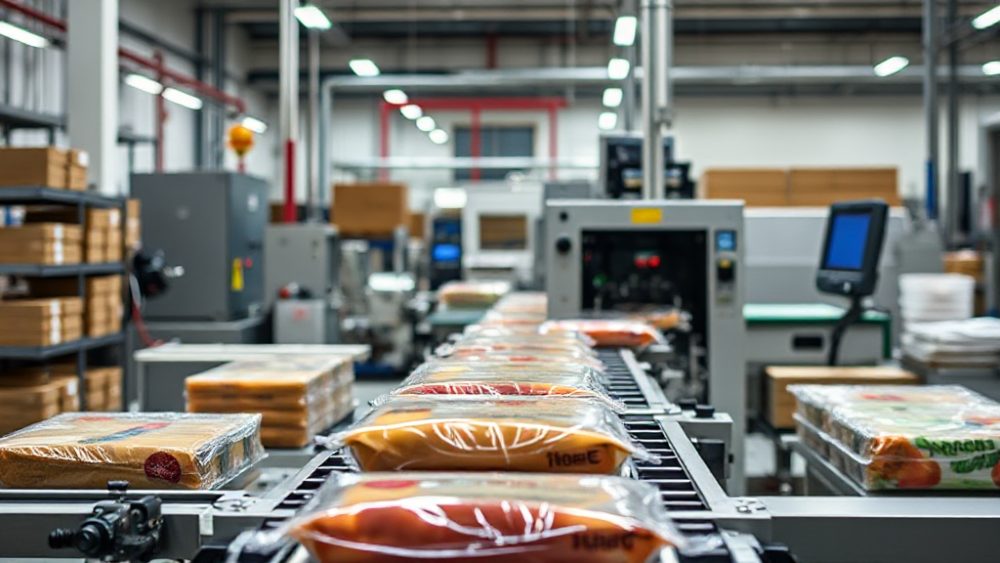
Automatic Shrink Wrapping for Small Production Runs
If you run a small production unit, automation can sound like a cost you are not ready for. But the threshold for justifying an automatic Shrink wrapping machine is often lower than most small producers expect. The decision usually comes down to how many packs you seal each shift, how consistent the finish must be, and how much of your day disappears into manual wrapping.
When Automation Starts to Pay Off for Low-Volume Producers
Manual wrapping has a hidden cost: it is slow, inconsistent, and tied to one or two skilled hands. At low volumes, that may be fine. Once you cross a certain number of packs per shift, the labour hours and rejected wraps start to add up faster than the machine cost.
For many small units, the break-even point sits somewhere between a few hundred and a few thousand packs per shift. The exact number depends on pack size, film type, and how many people you currently assign to wrapping. Rather than chasing a single figure, track the time each pack takes and the share that needs rework.
Signs you are ready to automate
- Wrapping regularly delays dispatch or eats into production time.
- Customers complain about loose, wrinkled, or inconsistent wraps.
- You need the same finish across every batch, not just on good days.
- Finding and training manual wrappers is becoming difficult.
If two or more of these sound familiar, an Automatic Shrink Wrapping machine is worth pricing before you hire another wrapper.
Choosing the Right Setup Without Overbuying
Small producers often assume automation means a full high-speed line. In practice, a compact sealer paired with a shrink tunnel Machine can handle modest volumes without demanding a large floor area or a dedicated operator. The key is matching the machine’s cycle time to your actual output, not to a future volume you may never reach.
Match the machine to your real output
Start with your busiest shift, not your average day. If your peak is a few hundred packs, a semi-automatic or compact automatic unit is usually enough. Oversizing adds cost, power draw, and complexity you will not recover at low volume.
Check film and pack compatibility
Film width, pack dimensions, and tunnel temperature all interact. A machine that runs well on one pack size may struggle with another. Test with your actual products and film before committing, and confirm the tunnel can hold a steady temperature through a full shift.
Plan for maintenance and spares
Even a small unit needs clean heating elements, checked seals, and a spare parts source. Ask about service response and consumable availability before you buy. A machine that sits idle waiting for a part costs more than the labour it replaced.
Simple comparison for small producers
| Setup | Best for | Main trade-off |
|---|---|---|
| Manual wrapping | Very low volume, varied packs | Slow, inconsistent finish |
| Semi-automatic sealer and tunnel | Low to moderate volume | Operator still loads each pack |
| Compact automatic line | Steady, repeatable output | Higher upfront cost |
The right choice is the smallest setup that removes your bottleneck. For most small units, that is a compact automatic system rather than a full high-speed line.
Automation is not an all-or-nothing leap. If your wrapping time, rework rate, and dispatch pressure are already costing you, the threshold has likely been crossed. Price a machine against the hours and rejects you currently absorb, and the decision becomes clearer than the sticker price suggests.